
How Arrest Warrants Work in Hardeman County
Tennessee Rule 3 opens the process with a written complaint sworn before a magistrate or a neutral, authorized clerk. Rule 4 comes next. That rule governs probable cause. The judicial officer decides whether to issue an arrest warrant or a summons, and the order directs an authorized officer to arrest the person and bring them before the proper court. In Hardeman County, General Sessions is the first stop for most misdemeanors and felony preliminary hearings. Indicted cases may move to Circuit Court. The case's stage decides which clerk has the file.
Hardeman County Rule 3 Affidavits
A sworn affidavit of complaint lays out the essential facts alleged and gives the magistrate a basis to review probable cause. Hardeman County publishes no warrant numbers, charge-code fields, or sample entries. For a case identifier, ask the issuing clerk, and ask whether any part of the file is sealed. The Tennessee criminal-rules index lists Rules 3, 4, 5, and 9 and explains how process issues. It offers no county search or current docket.
Arrest Warrants: What They Contain
An arrest warrant names the defendant and describes the offense. It also records the issuing authority and the date. The document commands an officer to bring the person before a court and may carry a return or execution entry. Hardeman County posts no sample public arrest-warrant listing, so its exact local fields cannot be checked.
| Person and offense | Name and description of the charge in the complaint. |
|---|---|
| Probable-cause source | Sworn complaint or examination reviewed under the criminal rules. |
| Issuing authority | Magistrate, judge, or authorized clerk who made the required decision. |
| Command and court | Officer direction and the court before which the person must appear. |
| Return, bond, case number | Ask the clerk; Hardeman's public pages do not show local formats or status codes. |
For questions about service or custody in Hardeman County, call the sheriff; for the file itself, call the issuing clerk.
Hardeman County Sheriff Service Chain
The sheriff's duty page is plain about the job. The office attends court, executes and returns process delivered for that purpose, and operates the jail. A Hardeman County service route can run from the issuing court to the sheriff or another authorized officer, then to booking and an initial court appearance. The sheriff cannot dismiss the case. Only the court can recall a warrant. Call the main sheriff number and ask for the Warrants/HR Clerk, then contact the issuing court. The Office of Sheriff page describes the statutory role.
Hardeman County Sheriff's Office
Criminal Justice Complex, Bolivar
731-658-3971
How Warrants Get Served in Hardeman County
County process may go to the sheriff or a deputy for service. A city department can serve its own court's orders. Middleton's charter and code give its police exactly that role. Check other cities with the clerk or police office. Never assume the sheriff serves every city-court warrant. After an arrest come booking and an initial appearance. Exact release terms, bond, and the next hearing come from the court, and Hardeman County publishes no general bond schedule or surrender window, so call before traveling.
Federal Warrants in Hardeman County
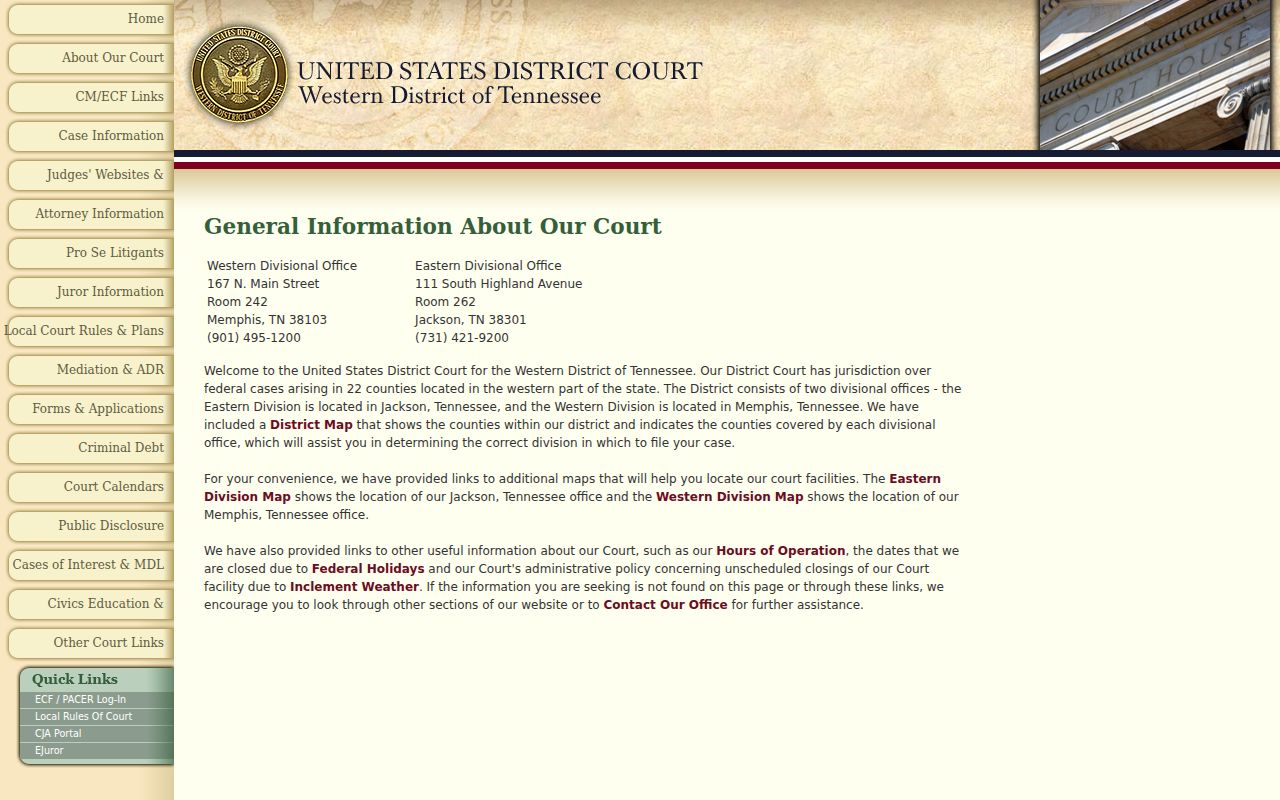
Federal process runs on a separate track. Hardeman County sits in the Eastern Division of the U.S. District Court for the Western District of Tennessee. The federal court's Jackson office serves that division. U.S. Marshals and federal agents handle federal matters. A local sheriff's booking report is not a federal warrant search. The federal court's Eastern Division information identifies the division's jurisdiction and its Jackson location, covering courthouse offices and county reach rather than any warrant roster.
For suspected federal process, seek federal counsel or contact the responsible federal office.
Arrest Warrants, Summonses, and Bench Warrants
These Hardeman County terms mark different events. A summons orders an appearance without any command to arrest. A bench warrant or FTA order follows a missed court duty, while a complaint-based arrest warrant follows probable-cause review.
| Process | Trigger | First place to ask |
|---|---|---|
| Arrest warrant | Complaint and probable cause | Issuing clerk and sheriff |
| Summons | Court notice to appear | Court that issued it |
| Bench or FTA warrant | Missed date or court order | Court that set the case |
For the missed-court process, the Hardeman County bench-warrant reference explains local court routes.
Before a Hardeman County Arrest Warrant
If an arrest order might exist, ask the Hardeman County sheriff which court holds it. Then speak with a Tennessee attorney. Counsel can ask the issuing clerk whether a scheduled appearance, motion, bond, or voluntary walk-through is accepted. Hardeman County publishes no countywide walk-in procedure. Before any visit, confirm the ID, payment form, hours, and release proof required. A bond may win release. It does not end the underlying case. The sheriff can explain service, but only the court can change its docket.
Handling an Arrest Warrant in Your Name
Make a specific inquiry. Give the Hardeman County clerk a case number if you have one, and ask whether the process is active, served, recalled, or sealed. If the sheriff cannot confirm by phone, request an existing record from the correct office under the Tennessee Public Records Act. Juvenile and protected investigative records may be withheld.
Important: Do not rely on a booking report or online absence. Speak with an attorney and the issuing court before arranging an appearance or surrender.
After a Hardeman County court action, ask for written proof. That means an order or a written status confirmation. If a Tennessee license consequence is involved, ask the court how it sends compliance to the Department of Safety.
Hardeman County Arrest-Record Access
Tennessee's public-records law, the TPRA under Tenn. Code Ann. § 10-7-503, lets any citizen ask for a record that already exists. Send the request to the right holder. Sheriff-held material goes to the sheriff's records contact, county case files to the Circuit Court Clerk, and local process papers to the city clerk. The law does not require an office to build a warrant database. The Comptroller's public-records guidance explains how to file and what happens if records are not produced promptly, since a response is due within seven business days. Ask about copy charges and redactions first.